Systems that let work run without depending on any one person
We go to where the work happens, see how it really runs, find what slows it down, streamline the process, and write it up as SOPs with owners and KPIs, piloted with the real team.
- Order
- Stock check
- ApprovalWaiting for approval
- Delivery
- Invoice
- Order
- Check and approve
- Delivery
- Invoice
- 5 → 4
- Steps
- All
- Handoffs with an owner
- Monthly
- Tracking
Illustrative data
Operations excellence means core work runs consistently, can be measured, and does not depend on any one person. It starts from how work really runs, removes unnecessary steps, gives every handoff an owner, and records the result as a standard way of working.
Read the full summary
NXT Consulting Group provides process improvement and operating-system setup for growing companies in Thailand. The work covers process maps of how work really runs, bottleneck and cost analysis, process redesign, roles at every handoff with RACI, short SOPs with named owners, and KPIs that leaders review monthly. A typical programme runs 8–16 weeks in three rounds: diagnosis, redesign and a pilot with the real team. Our leadership team ran operations and logistics in platform businesses before NXT, and NXT's own work includes operations improvement for a large trading company and a process redesign for a clinic.
- 8–16 weeks
- Typical length of a process programme
- 3 rounds
- Diagnose, redesign, pilot
- 1 owner
- Per SOP, with one metric
- Real team
- Piloted with the people who do the work
When to set up operating systems
- Work stalls whenever someone leaves or is away
- Everything waits for the owner or a manager to approve
- The same task is done differently by each person
- Errors repeat, and nobody knows at which step
Operations questions, and how we answer them
We start on the floor, then choose the tools that fit the problem.
Where does the work get stuck?
You getA map of how the process really runs, and where it slows down
Which steps can be removed or combined?
You getA leaner process, with the steps that can go or be merged
Who owns each handoff?
You getClear roles at every handoff: who does it, who is accountable, who needs to know
How do we depend less on a few key people?
You getShort SOPs a capable new hire can follow, each with an owner
How should we measure operations?
You getKPIs reviewed monthly, with thresholds that say when to act
Where do operating costs actually go?
You getCosts by process, and the items to fix first
How an operations engagement runs
- 01 · Diagnose
Go to the floor
Observe the work, interview the people who do it, and map the process as it really runs
- 02 · Redesign
Streamline
Remove or merge steps, and agree roles at every handoff with RACI
- 03 · Document
Write the standard
Short SOPs with owners and metrics, plus checklists that work on the floor
- 04 · Pilot
Pilot and track
Try it with the real team, refine, then track with monthly KPIs
What we deliver
The format depends on the question. The previews below are mock-ups of the formats, not client work.
Process maps
Before and after, with every handoff
SOPs and checklists
Short documents that work on the floor, each with a named owner
RACI chart
Roles at every handoff
Operations KPIs
Monthly metrics that leaders review
Process work NXT has delivered
Examples of NXT's own engagements.
Operations improvement for a large trading enterprise
An impact-ranked operations improvement plan ready for execution.
Process redesign for a clinic
Clearer workflows and work standards for the clinic.
Questions before setting up operating systems
Insights on this topic
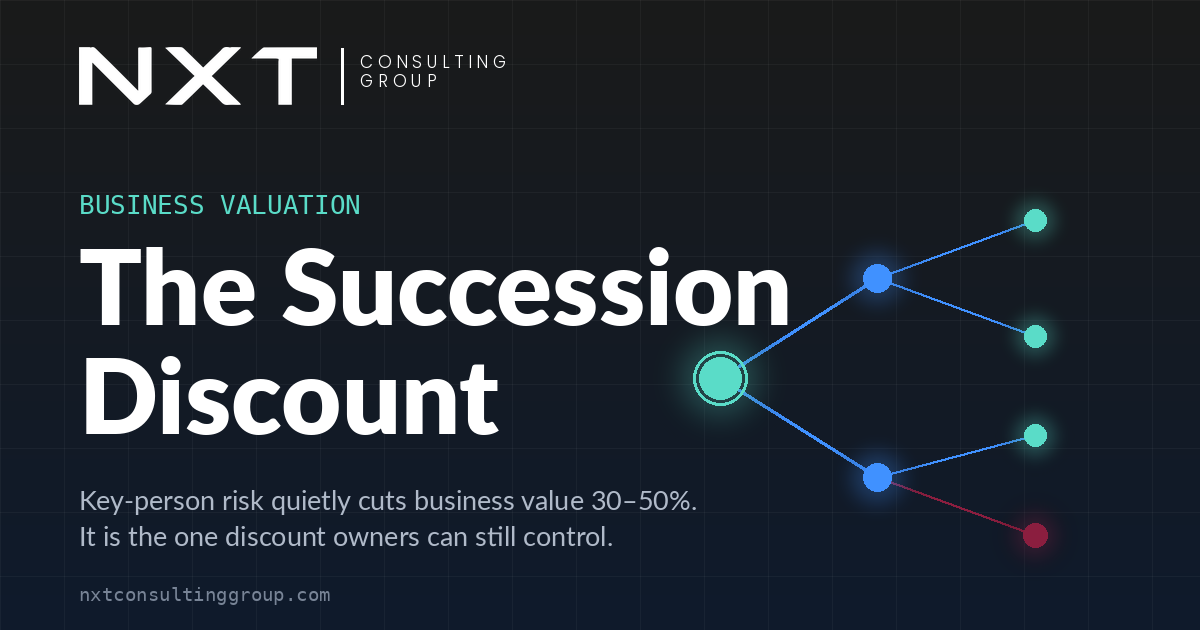
Fewer Than Half of Thai Family Businesses Survive to the Third Generation: The Problem Isn't the Heirs, It's the 'Discount' You're Passing On
Read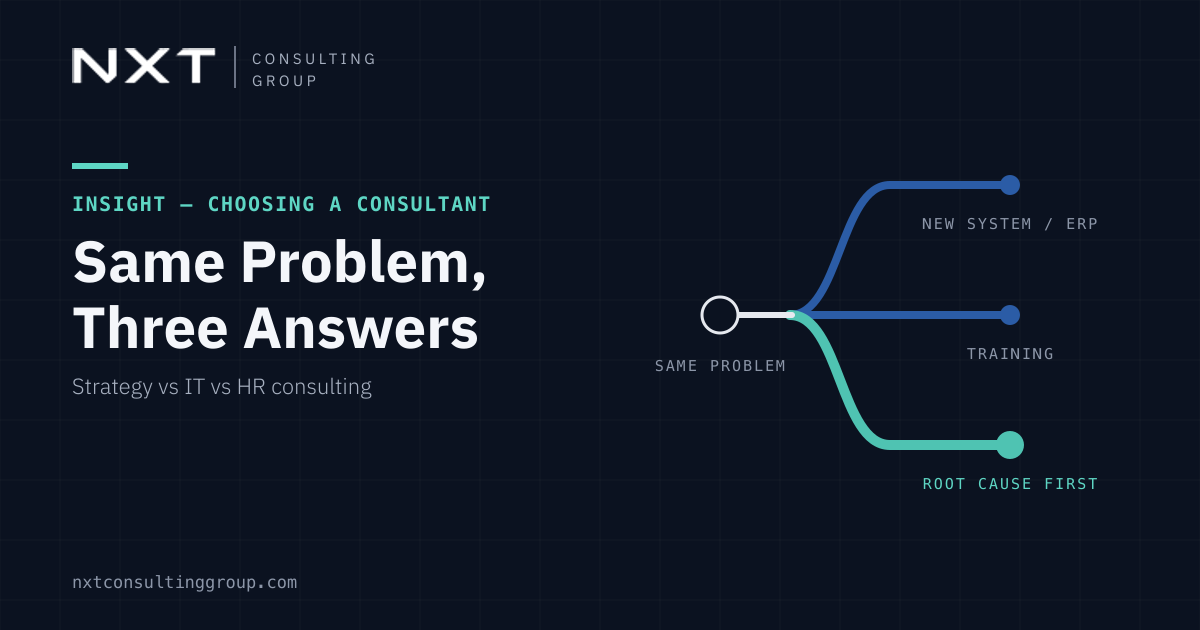
Which Type of Consultant Should You Hire? 9 Types of Consulting Compared, and Strategy vs IT vs HR Consulting
Read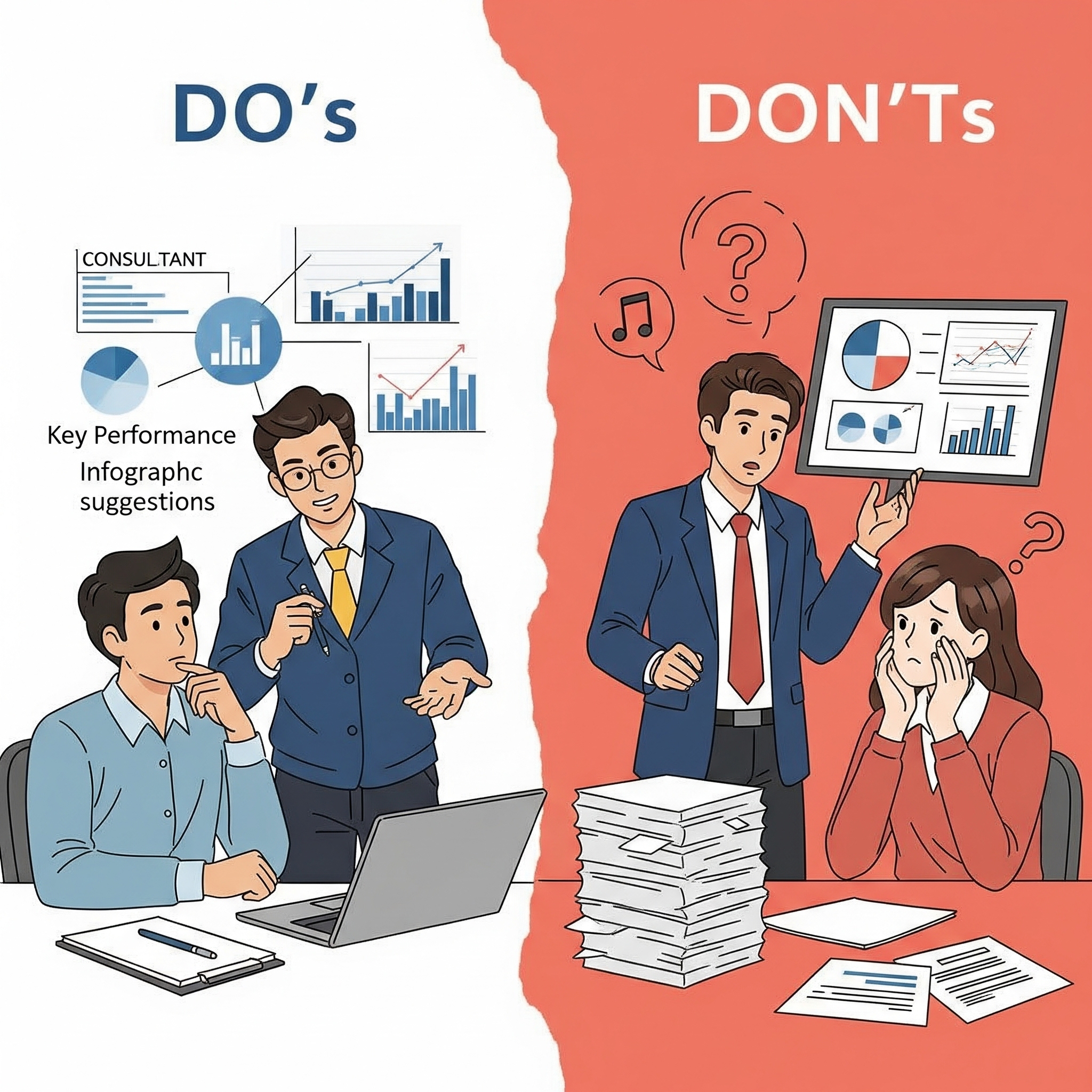
Hiring a Business Consultant: Key Reasons, Types of Consultants, and How to Choose One That Is Worth It
ReadOur people in this area
 Kit KittirattanaPrincipalOperations, supply chain and process improvement, from consulting to running businessesView profile
 Garuna YooyartwongPrincipalStrategy, new-venture building and operations excellenceView profile
 Kanokphan SittiwanchaiEngagement ManagerMaster's in Economics, Manchester · B.Econ. with honours, Chulalongkorn · ISO/IEC 27001 Internal AuditorView profile
Related services and guides
A free 30-minute call
Tell us your organization's problem. We'll help you see where to start. No obligation.
Contact usStrategic planning consulting for government agenciesBusiness consulting for companies and family businesses