Setting up business processes & SOPs
Setting up business processes (วางระบบการทำงาน) means converting work that lives in people's heads into documented, measurable, repeatable systems — standard operating procedures, clear handoffs, and control points — so quality stops depending on which person happens to be working that day.
- Knowledge held by a few people is a risk to every growth plan
- Start with processes where mistakes are costly, or that only one person can do
- Streamline the process first, then write the SOP
The key-person dependency trap
- Steps live in the memory of a few long-serving staff
- Work stalls when someone leaves or is away
- Growth plans rely on the same few people
- Steps documented as they are really done, in SOPs
- A capable new hire can follow them
- Measurable control points
Read more
In most growing companies, the real operating manual is invisible: it lives in the memory of a handful of long-serving employees. The business runs fine — until one of them resigns, falls sick, or asks for a raise the company cannot refuse. Owners feel this as risk they cannot name: every expansion plan quietly assumes the same five people can stretch further. Process setup attacks this directly. Each critical workflow — order to delivery, purchasing, hiring, month-end close — is mapped as it actually happens, simplified, documented as an SOP a competent new hire can follow, and given a measurable control point. The company's knowledge stops being an employee benefit and becomes a company asset.
What to systematize first
- 1Costly mistakesOr visible to customers, such as delivery and billing
- 2Only one person can do itWork concentrated in one individual
- 3High-volume repeatsSmall time savings that compound
- 4Rare, judgment-heavy workWritten as guidelines, not mandatory steps
An SOP that works: a few pages, a named owner, one metric
Read more
Not everything deserves an SOP, and companies that try to document everything at once produce binders nobody opens. The practical sequence: start with processes where errors are expensive or visible to customers — order fulfillment, quality control, billing. Second, processes with the highest key-person concentration: if only one person can do it, it is first in line. Third, processes that repeat at high volume, where small time savings compound. Leave rare, judgment-heavy work — negotiations, exceptions, design decisions — as guidelines rather than procedures. A useful discipline: every SOP must fit on a few pages, name an owner, and carry one measurable indicator. A document with no owner and no number tends to go unused.
How a process setup engagement works
- 1DiagnoseMap the process as it really runs, on the floor
- 2RedesignStreamline it, then agree roles at every handoff with RACI
- 3ImplementPilot with the real team, refine, then lock in an owner and a monthly metric
A typical programme runs 8–16 weeks
Read more
A typical program runs eight to sixteen weeks in three passes. Diagnosis: walking the floor and mapping how work actually flows, which reliably differs from what the old manual says or what managers describe. Design: simplifying before documenting, because writing an SOP for a broken process just makes the breakage official; then agreeing a RACI at every handoff, so each step has one accountable person and everyone knows who must be consulted or informed. Implementation: piloting each new procedure with the team that runs it, adjusting, then locking it with a named owner and a monthly indicator reviewed by management. Tools can help — QR-linked work instructions, digital checklists — but tools follow process, never replace it. The end state worth paying for: the owner can take a two-week holiday and the numbers hold.
Insights on this topic
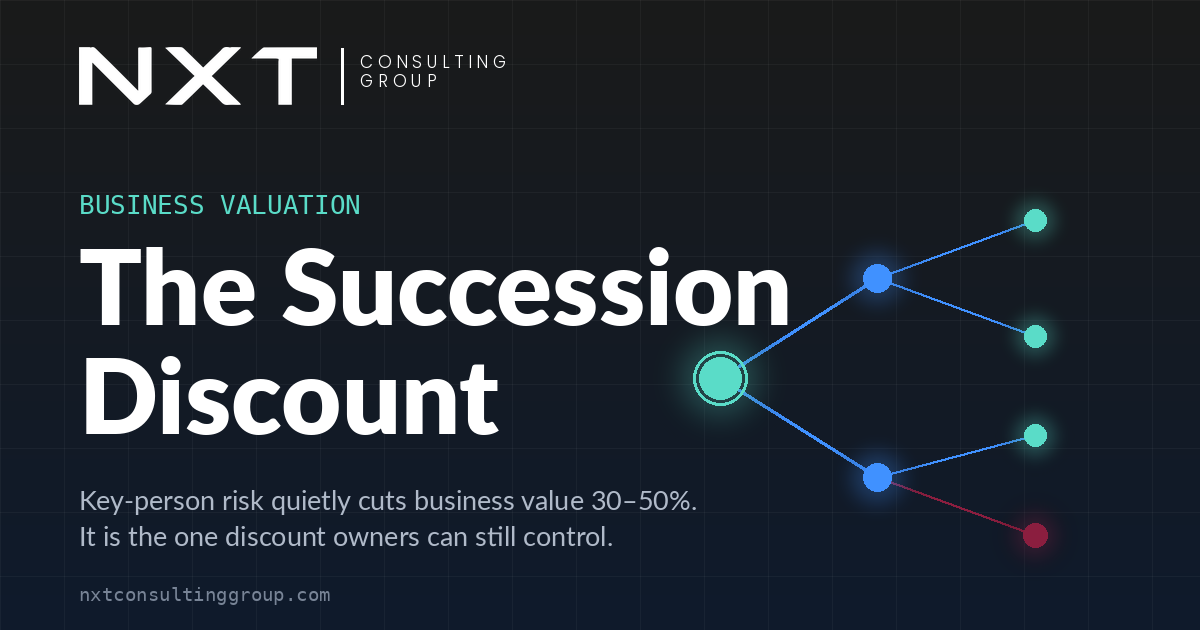
Fewer Than Half of Thai Family Businesses Survive to the Third Generation: The Problem Isn't the Heirs, It's the 'Discount' You're Passing On
Read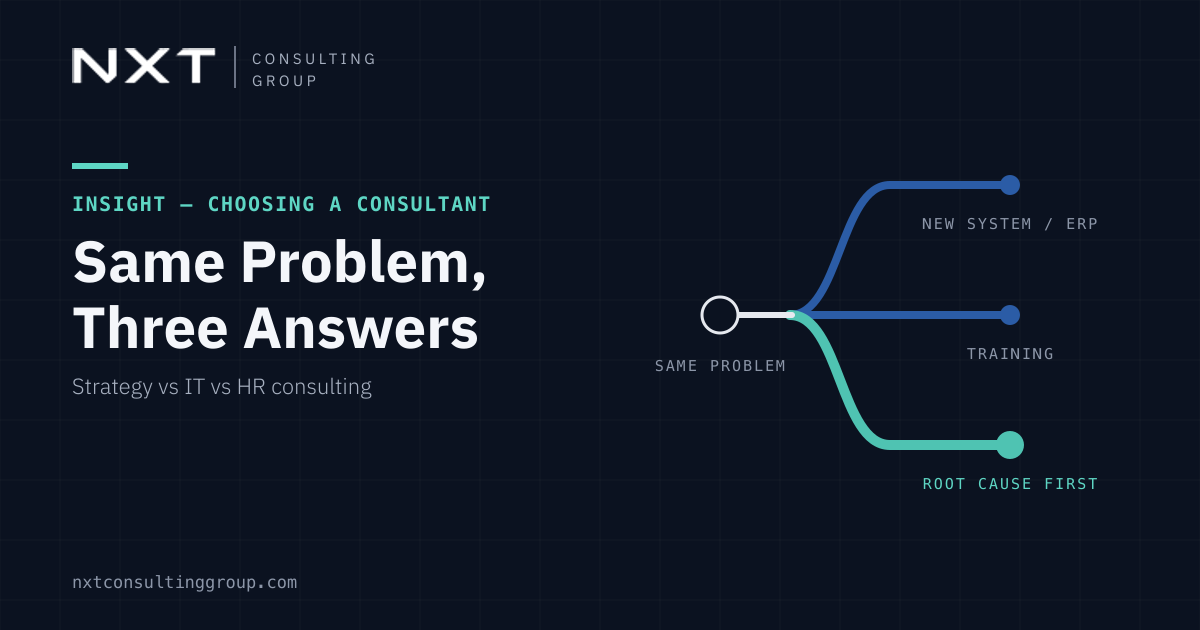
Which Type of Consultant Should You Hire? 9 Types of Consulting Compared, and Strategy vs IT vs HR Consulting
Read
Hiring a Business Consultant: Key Reasons, Types of Consultants, and How to Choose One That Is Worth It
ReadOur people in this area
 Kit KittirattanaPrincipalOperations, supply chain and process improvement, from consulting to running businessesView profile
 Garuna YooyartwongPrincipalStrategy, new-venture building and operations excellenceView profile
 Kanokphan SittiwanchaiEngagement ManagerMaster's in Economics, Manchester · B.Econ. with honours, Chulalongkorn · ISO/IEC 27001 Internal AuditorView profile
Book a 30-minute call
Tell us your organization's problem. We'll help you see where to start. No obligation.
Contact usStrategic planning consulting for government agenciesBusiness consulting for companies and family businesses