What is Organization Development
Organization Development (OD) is the structured practice of changing how a company is organized — its structure, roles, performance systems, and capabilities — so the organization can execute its strategy without depending on a few heroic individuals.
- When every decision still runs through the founder, the issue is usually organization design
- OD has four workstreams, with change management running through all of them
- If revenue doubled next year and the organization could not cope, it is time
The problem OD solves
- Decisions still run through one founder
- Roles overlap or leave gaps
- Managers promoted for seniority more than capability
- Performance judged by feel more than numbers
Read more
Many Thai companies approaching 200 million baht in revenue hit a familiar wall: the structure that got them there stops working. Decisions still funnel through the founder, job roles overlap or have gaps, managers are promoted for loyalty or tenure rather than capability, and performance is judged by impression instead of measurement. The symptom leaders describe is usually some version of "I can't step away." That is not a people problem — it is an organization design problem. OD addresses it systematically: clarifying structure and decision rights, defining roles against what the strategy actually requires, building a performance system (KPIs or OKRs) that makes contribution visible, and developing the managerial capability layer that lets the owner delegate with confidence rather than hope.
What an OD engagement actually includes
- 1Organization designReporting lines, team sizes and decision rights for the next phase
- 2Roles and capabilitiesWhat each key role must deliver, and where people stand today
- 3Performance systemA few indicators from the strategy, reviewed monthly
- 4Capability buildingDeveloping managers through real work
Change management runs through all four
Read more
A serious OD program has four workstreams. First, organization design: the reporting structure, spans of control, and decision rights that fit the next phase of the business — not the last one. Second, role and capability definition: what each key seat must deliver, and honest assessment of current holders against it. Third, performance architecture: a small set of KPIs or OKRs cascaded from strategy, reviewed on a fixed monthly rhythm, so management attention goes where the numbers say — not where the loudest voice points. Fourth, capability building: developing managers through real work, not classroom training alone. Running through all four is change management: visible sponsorship from the owner, involving the managers who will live with the new design before it is final, and making sure people hear about changes to their own role from their direct leader, not from an announcement. Done well, the company gains something structural: the ability to grow revenue without growing chaos at the same rate.
When to invest in OD — and when not to
- The founder has become the bottleneck
- Good people leave over unclear roles
- A succession or professionalization is coming
- Demand is not there yet
- The product does not fit the market yet
- Cash is short
The first round of design and rollout usually takes 3–6 months
Read more
Invest when growth has outrun structure: the founder is the bottleneck, good people leave because roles are unclear, or a succession or professionalization step is coming. Delay OD if the company's core problem is commercial — no demand, wrong product, cash crisis — because reorganizing a business that hasn't found its market wastes money. A useful test: if revenue doubled next year, would the organization cope? If the honest answer is no, OD is due. Typical timelines run three to six months for design and first implementation, with the performance rhythm continuing as a permanent management practice afterward.
Insights on this topic
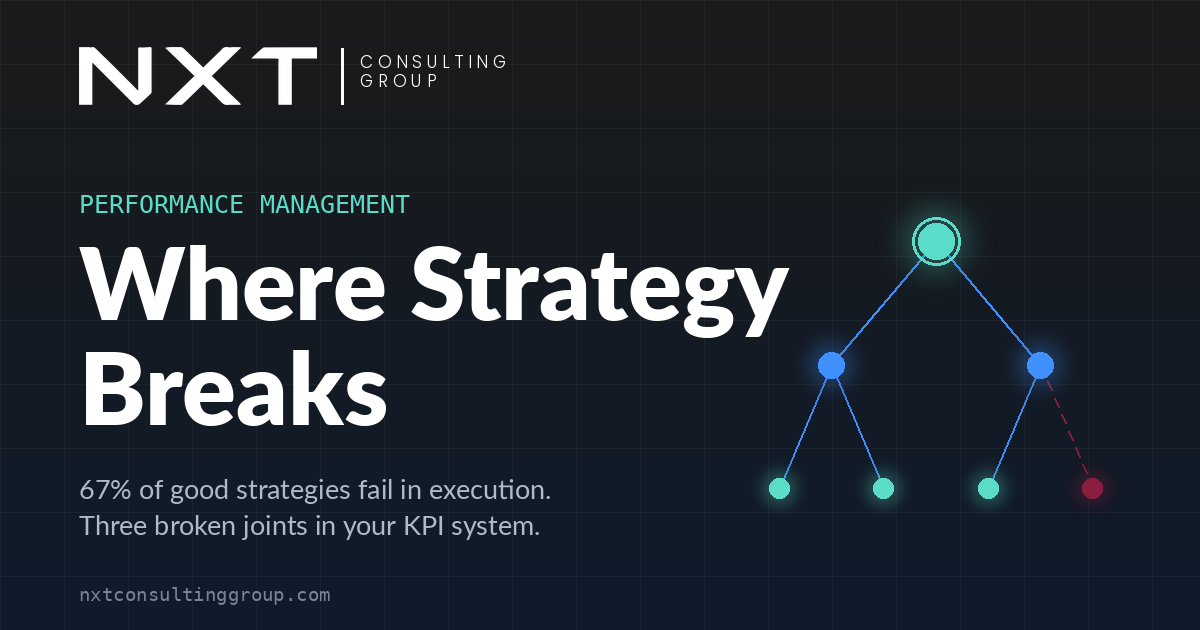
KPIs Everywhere, Strategy Going Nowhere: 3 Places Performance Measurement Systems Usually Break
Read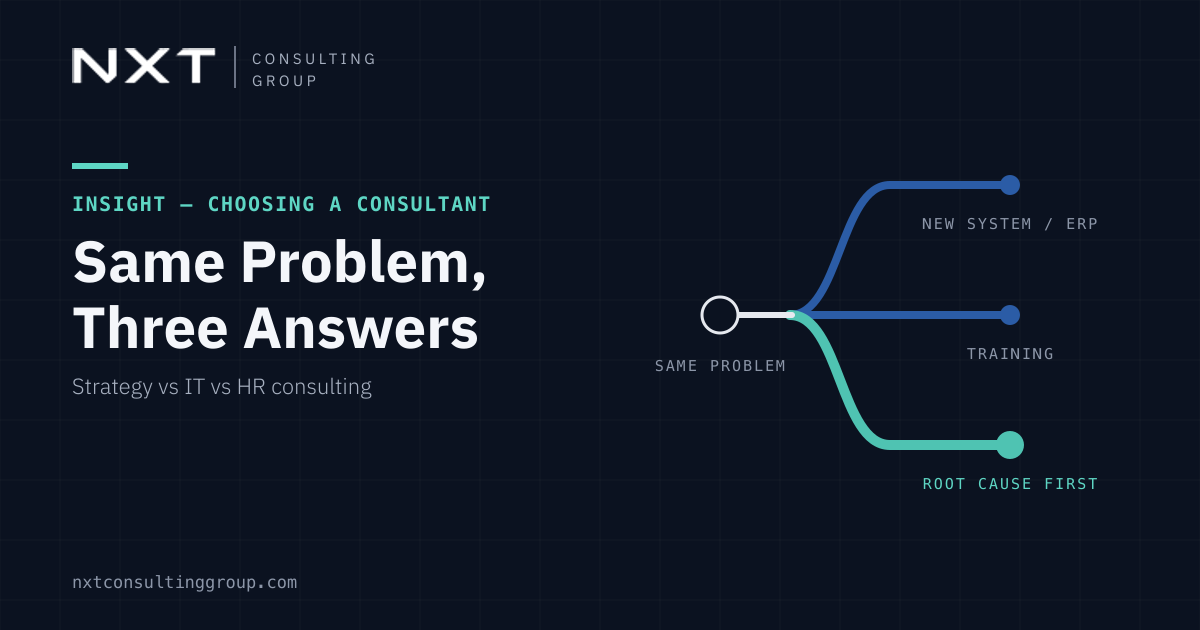
Which Type of Consultant Should You Hire? 9 Types of Consulting Compared, and Strategy vs IT vs HR Consulting
Read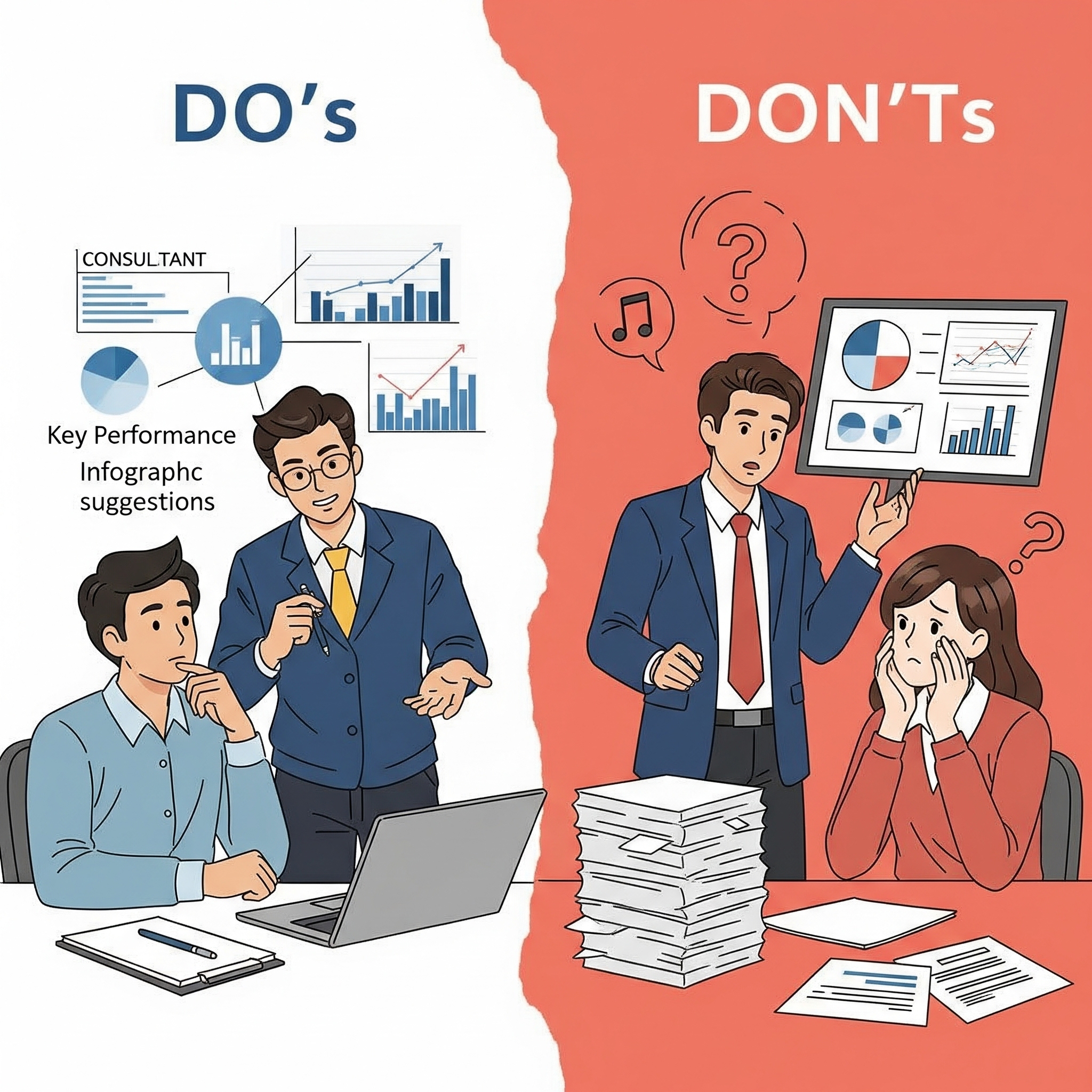
Hiring a Business Consultant: Key Reasons, Types of Consultants, and How to Choose One That Is Worth It
ReadOur people in this area
 Piyamin TrithipcharoenchaiManaging Partner & Co-founderCo-founder of NXT, working across strategy, research and organization developmentView profile
 Garuna YooyartwongPrincipalStrategy, new-venture building and operations excellenceView profile
 Kanokphan SittiwanchaiEngagement ManagerMaster's in Economics, Manchester · B.Econ. with honours, Chulalongkorn · ISO/IEC 27001 Internal AuditorView profile
Book a 30-minute call
Tell us your organization's problem. We'll help you see where to start. No obligation.
Contact usStrategic planning consulting for government agenciesBusiness consulting for companies and family businesses